
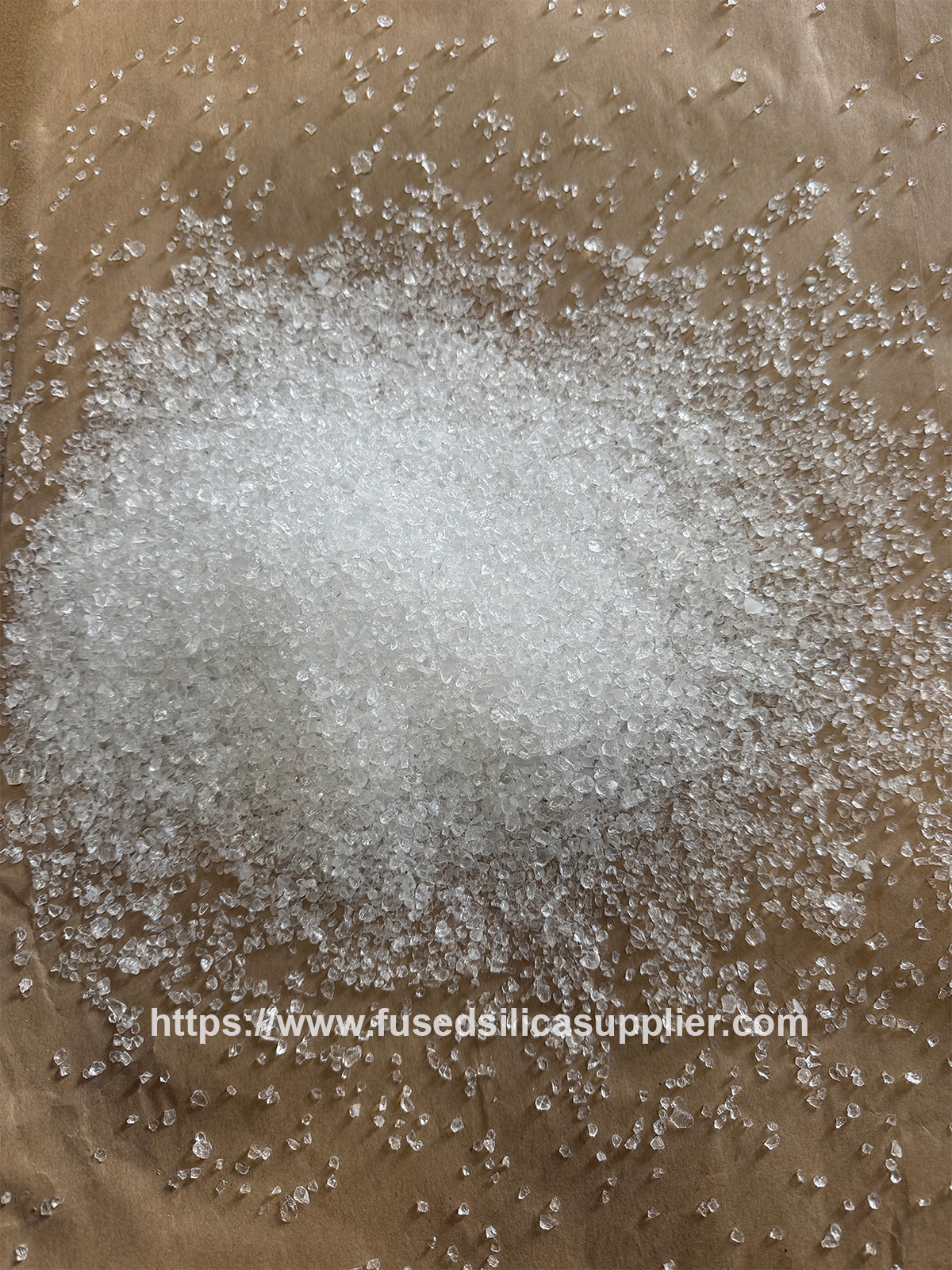
Fused Silica – Basic Information and Industrial Applications
Fused silica is a high-purity form of silicon dioxide (SiO₂) produced by melting natural quartz or refined silica sand at extremely high temperatures. Unlike crystalline silica, fused silica has an amorphous (non-crystalline) structure, giving it exceptional thermal and chemical stability.
Due to its unique physical and chemical properties, fused silica is widely used in industries such as investment casting, refractories, electronics, semiconductors, and high-temperature insulation.
Key Properties of Fused Silica
Fused silica is valued worldwide for the following outstanding characteristics:
- Extremely low thermal expansion
- Minimizes cracking under rapid temperature changes
- Excellent thermal shock resistance
- Ideal for high-temperature and repeated heating applications
- High purity (SiO₂ ≥ 99.5%)
- Low impurity levels ensure stable performance
- High softening temperature
- Maintains strength and structure at elevated temperatures
- Good chemical resistance
- Resistant to most acids and chemical corrosion
- Electrical insulation properties
- Suitable for electronic and electrical applications
Common Grades of Fused Silica
Different industrial applications require different grades of fused silica:
- A Grade – High purity, used for precision casting and advanced refractories
- B Grade – Cost-effective, widely used in industrial refractories
- AB Grade – Balanced performance and price, popular in European markets
- Electronics Grade – Ultra-high purity for electronic and semiconductor use
Main Applications of Fused Silica
1. Investment Casting (Shell Building)
Fused silica is a key raw material in ceramic shell systems for precision casting. It provides:
- Low thermal expansion
- Smooth surface finish
- Reduced shell cracking
Widely used for aerospace, automotive, and industrial precision components.
2. Refractory Materials
In refractory linings, fused silica improves:
- Thermal shock resistance
- Service life of furnaces
- Stability under high-temperature cycling
Commonly applied in induction furnaces, steel ladles, and kiln linings.
3. Electronics and Semiconductor Industry
High-purity fused silica is essential for:
- Electrical insulation components
- Semiconductor processing
- Optical and electronic substrates
Its excellent dielectric properties make it ideal for advanced electronic applications.
4. High-Temperature Insulation & Fillers
Used as fillers or aggregates in:
- Insulation boards
- High-temperature coatings
- Special industrial composites
Why Choose Fused Silica for Industrial Use?
Compared with traditional silica materials, fused silica offers:
- Longer service life
- Better dimensional stability
- Lower maintenance costs
- Improved product consistency
These advantages make it a preferred material for European, American, and global industrial users.
Conclusion
Fused silica is a high-performance industrial material combining thermal stability, chemical resistance, and high purity. Whether used in investment casting, refractories, or electronics, it delivers reliable performance under extreme conditions.
As industries demand higher precision and durability, fused silica continues to play a critical role in modern manufacturing.