
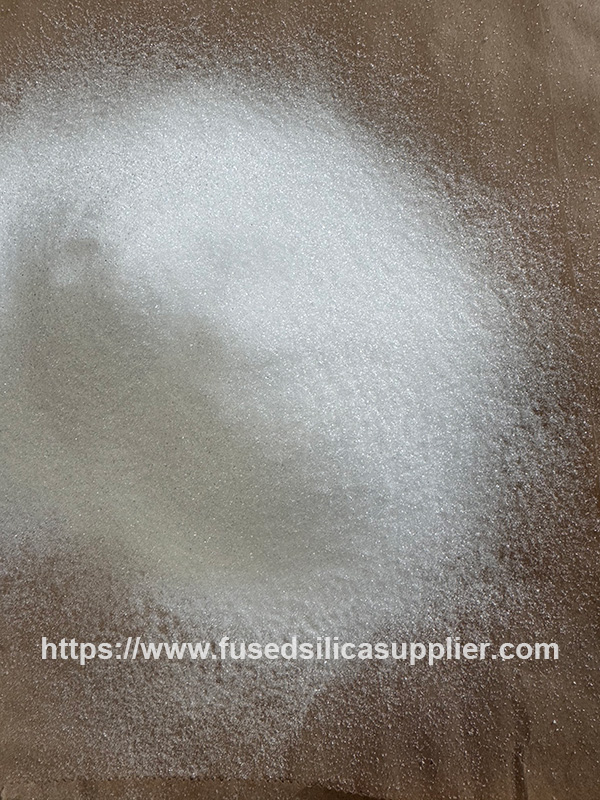
What Is Fused Silica?
Fused silica, also known as fused quartz or vitreous silica, is a high-purity glass consisting almost entirely of silicon dioxide (SiO₂) in an amorphous (non-crystalline) form. It is produced by melting high-purity natural quartz crystals at temperatures exceeding 1800°C using electric arc furnaces.
Unlike crystalline silica, fused silica has a random molecular structure that gives it exceptional thermal and physical properties, making it one of the most valuable industrial materials for high-temperature applications.
Key Properties of Fused Silica
Ultra-Low Thermal Expansion
Fused silica has an extremely low coefficient of thermal expansion (approximately 5×10⁻⁷/°C), which is about 15 times lower than ordinary glass. This means it can withstand rapid temperature changes without cracking or deforming.
Excellent Thermal Shock Resistance
Due to its low thermal expansion, fused silica can survive extreme thermal cycling - from room temperature to over 1000°C and back - without damage. This makes it ideal for applications involving repeated heating and cooling.
High Temperature Resistance
With a softening point around 1650°C and a melting point of approximately 1750°C, fused silica maintains its structural integrity at temperatures that would destroy most other materials.
Chemical Stability
Fused silica is highly resistant to most acids (except hydrofluoric acid) and chemicals, making it suitable for corrosive environments in industrial processes.
High Purity
Industrial fused silica typically contains 99.5% to 99.9% SiO₂, with very low levels of metallic impurities such as Al₂O₃, Fe₂O₃, Na₂O, and K₂O.
Fused Silica Grades
A Grade (≥99.9% SiO₂)
The highest purity grade with minimal impurities. Recommended for:
- High-end refractory applications
- Electronics and semiconductor packaging
- Applications requiring maximum thermal performance
B Grade (≥99.8% SiO₂)
A cost-effective grade offering excellent performance for most industrial applications:
- Refractory linings and ramming masses
- Foundry sand and cores
- Investment casting backup shells
AB Grade (≥99.85% SiO₂)
A specialized grade for precision applications:
- Investment casting primary shells
- Applications requiring controlled particle size distribution
- Precision ceramic molds
Industrial Applications
Refractory Industry
Fused silica is widely used in refractory materials for steel and iron making, including:
- Furnace linings
- Ramming masses for induction furnaces
- Low-expansion refractory bricks
- Monolithic castables
Foundry Industry
In metal casting, fused silica helps reduce defects and improve casting quality:
- Foundry sand for molds and cores
- Core sand for steel and alloy castings
- Precision casting applications
Investment Casting
The investment casting industry relies on fused silica for ceramic shell building:
- Primary coat materials (fine powders)
- Backup coat materials (coarser grains)
- Slurry formulations
Electronics Industry
High-purity fused silica powders are used in:
- Electronic sealing materials
- Epoxy resin fillers
- Semiconductor component packaging
- Electrical insulation
Why Choose Fused Silica?
Compared to other refractory materials, fused silica offers unique advantages:
- Dimensional Stability - Minimal expansion and contraction during thermal cycling
- Reduced Defects - Lower thermal stress means fewer cracks and failures
- Longer Service Life - Excellent durability under harsh conditions
- Consistent Quality - Stable amorphous structure (>99% glass phase)
Conclusion
Fused silica is an essential material for industries requiring high-temperature performance, dimensional accuracy, and chemical resistance. Understanding the different grades and their applications helps engineers and procurement professionals select the right material for their specific needs.
For more information about our fused silica products, visit our A Grade and B Grade product pages, or contact us for technical support and quotations.